Demystifying the Three Scopes of Emissions
Carbon accounting is the fundamental step toward corporate sustainability. Understanding how your organization generates greenhouse gases (GHG) across Scope 1, 2, and 3 is essential for regulatory compliance and environmental stewardship.
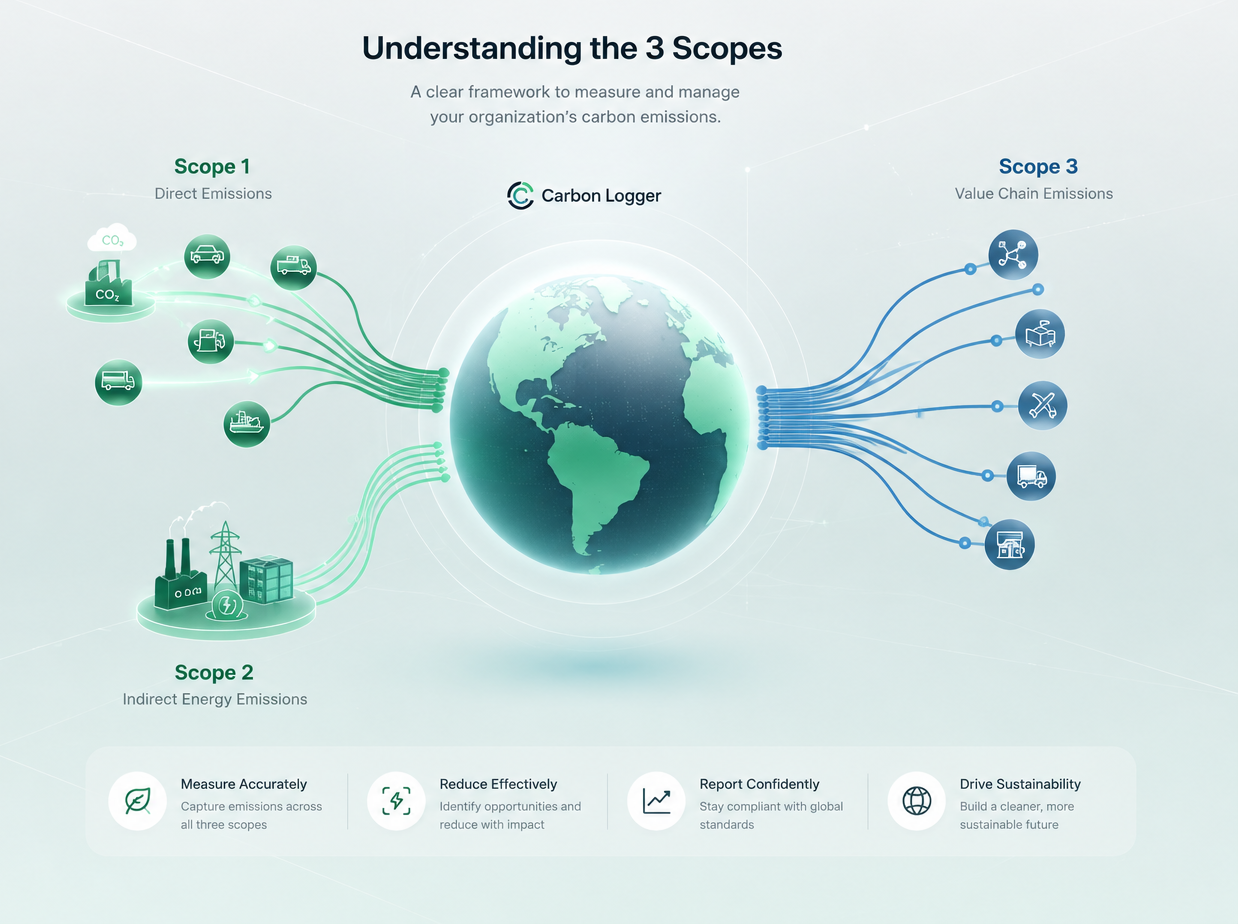
Comprehensive Scope Coverage
Categorizing emissions allows companies to focus efforts where they have the most impact and where they are most exposed to carbon risks.
factoryScope 1: Direct Emissions
Direct emissions from sources that are owned or controlled by your organization. This includes combustion of fuels in fixed and mobile sources.
boltScope 2: Indirect Energy
Indirect emissions from the generation of purchased electricity, steam, heat, or cooling consumed by your organization.
hubScope 3: Value Chain
All other indirect emissions that occur in a company’s value chain, including both upstream and downstream activities. Often 80%+ of total impact.
Why differentiate Scopes?
Regulatory Compliance
Global frameworks like CSRD and SEC rules increasingly mandate reporting across all three scopes.
Cost Reduction
Identifying high-emission areas in Scope 2 and 3 often reveals significant energy and supply chain efficiencies.
Brand Trust
Scientific transparency builds stakeholder confidence and attracts ESG-focused investors.
Data Sync Status
Active Cloud SyncReady to account for your impact?
Join global enterprises using Carbon Logger to track, report, and reduce their GHG emissions with audit-ready accuracy.
GCC & Global compliance ready.